

Hello and welcome to this edition,
Q4 of 2025 is in a few days and you might want to rethink your marketing playbook to be more efficient. I’ll guide you on how to choose the right tactics with a pull and push approach.
So in this edition you’ll learn:
What are pull and push marketing tactics?
Why you can’t rely only on pull or only on push
How do you build your playbook with a mix of tactics?
👋 If you want my help with your B2B business, here’s how I can help you;
1. Turn your LinkedIn™ content into qualified leads: My team and I will craft a tailored content strategy, rebrand your profile, and design a signature visual identity that makes you stand out. Your expertise will be transformed into infographics and thought-leadership posts. And beyond content, we’ll help you get inbound and outbound leads.
2. Book a 1-hour power hour with me (1st call is 60% OFF): Limited 1:1 advisory sessions to answer your questions and help with your marketing/content strategy. What past clients say: “Full value, no time wasted, and an expertise I have not seen elsewhere yet. I highly recommend working with him!” “He helped me rethink my business model and refine my offer. Absolutely top-tier. 200% satisfied.”
The key differences between pull and push marketing
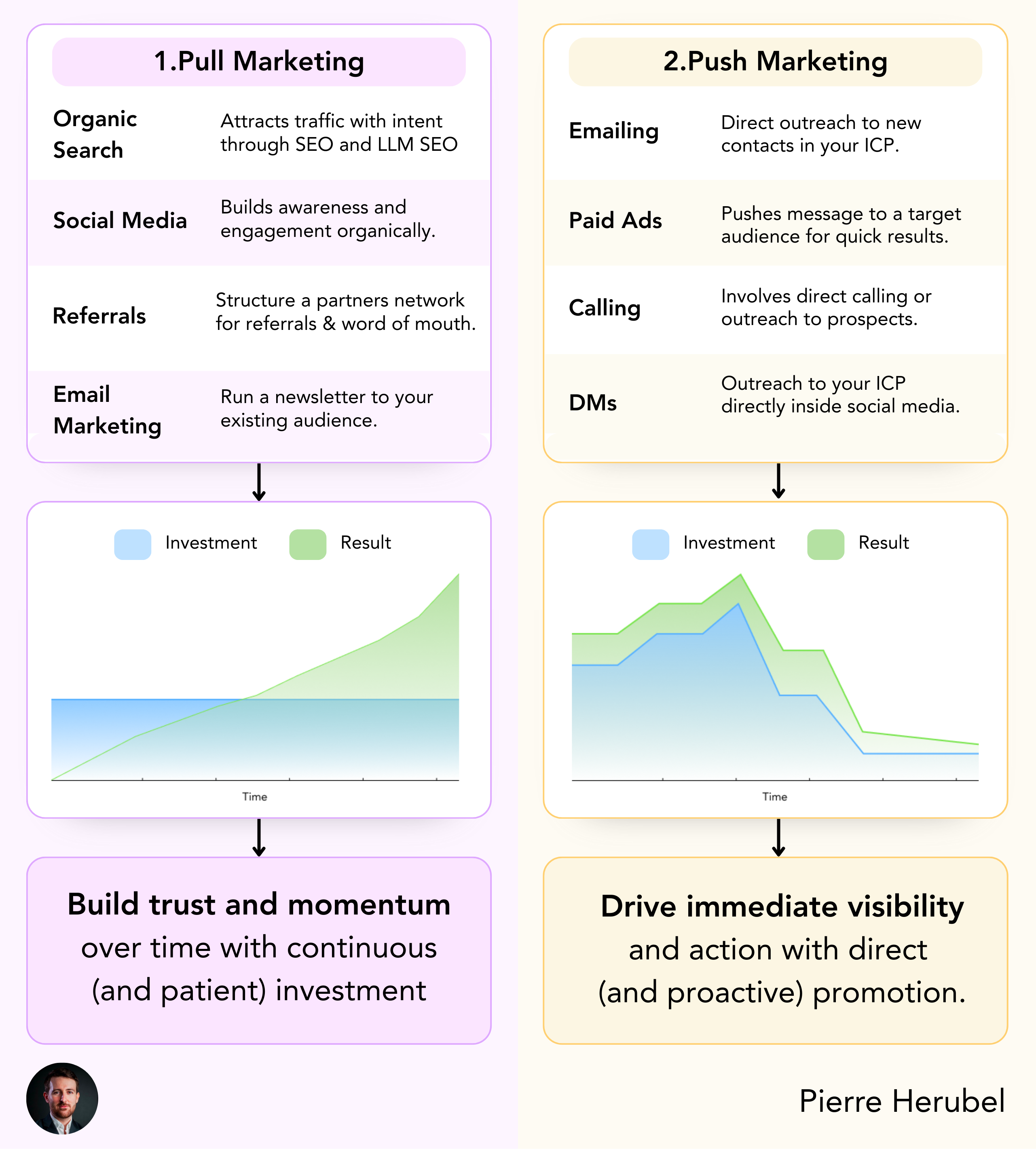
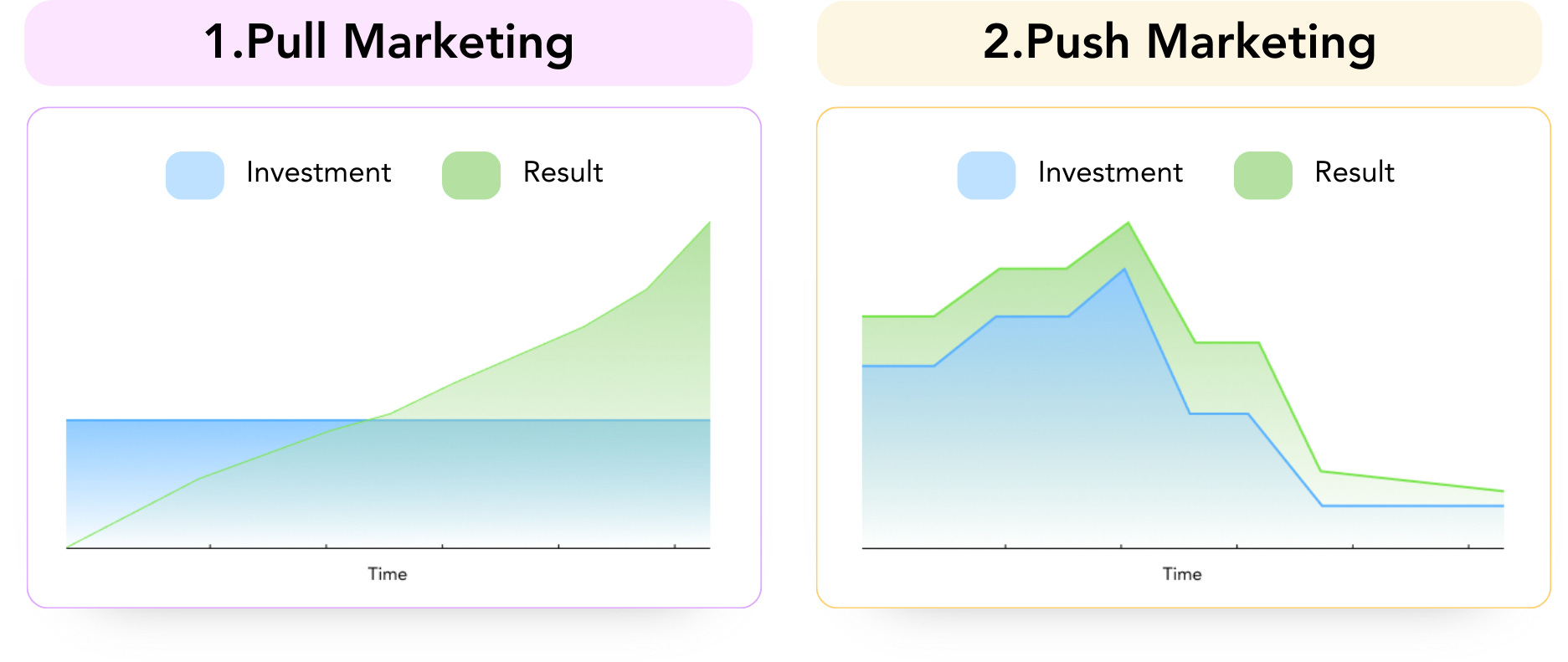
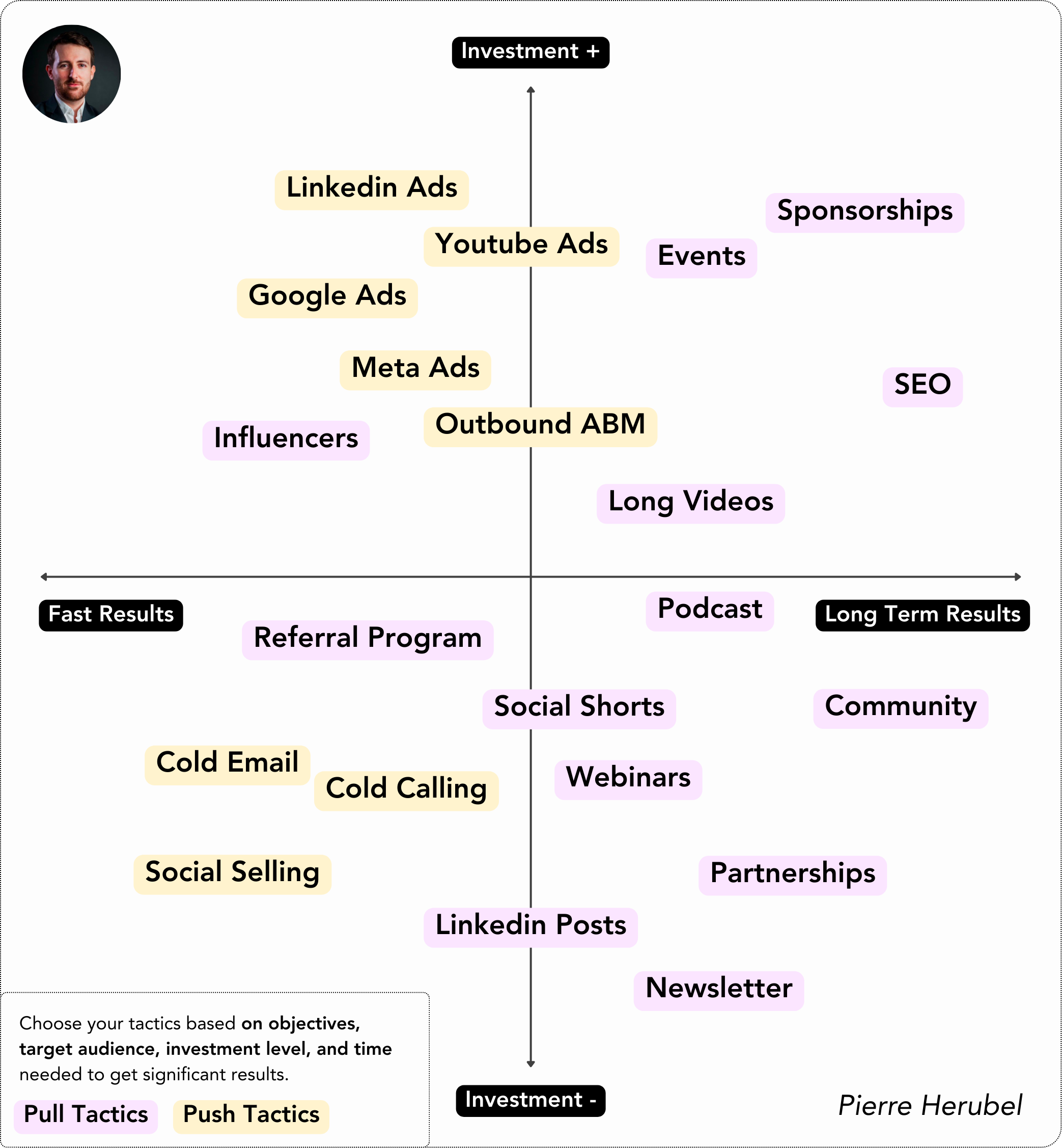
Pull and push tactics show different correlations between investment and results.
With push tactics, results often come quickly, but they may require continuous spending to sustain (linear or diminishing returns). In contrast, with pull tactics, results may take longer, but they compound over time (delayed but exponential returns).
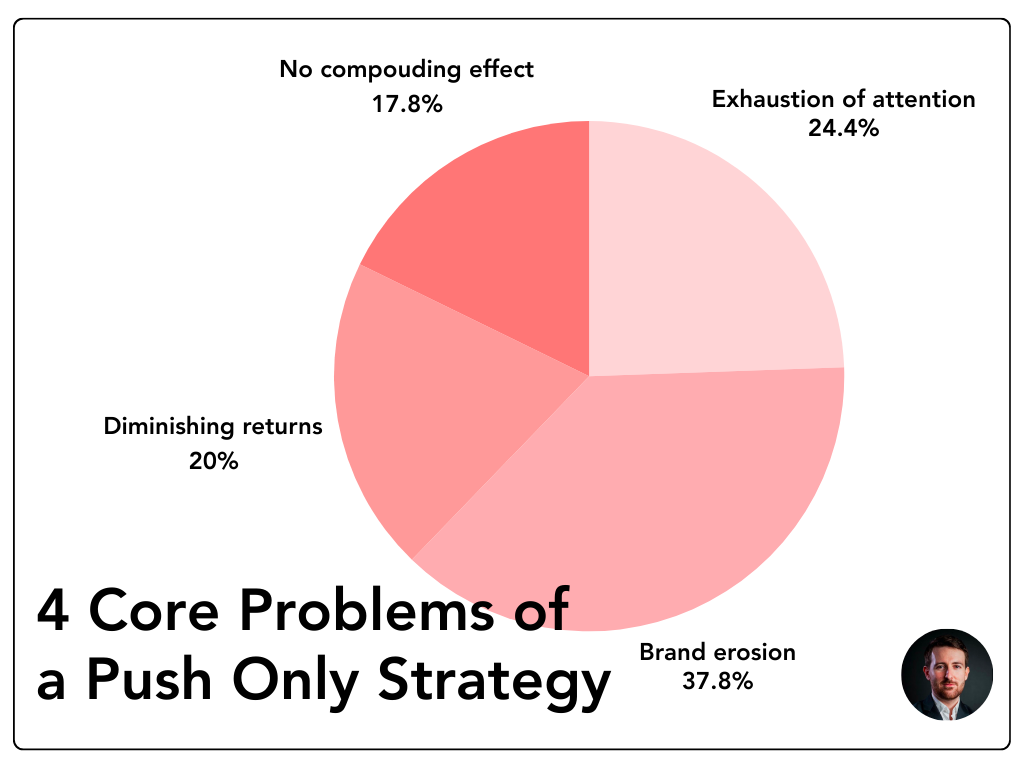
A push only approach can turn your strategy into a scorched earth marketing strategy
Push tactics can give you an immediate visibility and fast return on investment. You can control your inputs and predict your outputs accordingly. That said, only relying on push tactics will put your business at risk.
The risk comes from 4 main problems:
Exhaustion of attention: You flood your audience with outbound messages, ads, or cold outreach until they tune you out.
Brand erosion: Instead of being known for insight or authority, you’re remembered for spamming.
Diminishing returns: Each new push yields less engagement because your audience sees it as spam.
No compounding effect: You’re not building an ecosystem that auto-generate attention.
Because of these 4 problems, a push-only strategy is not a valid long term approach.
Pull marketing often gives you better qualified leads, but is harder to forecast, control, and scale
Pull marketing tactics attracts leads who already have intent or curiosity. They come to you, which means they’ve self-selected. As a result, sales cycles are shorter and conversion rates are higher because they’re already interested.
But, unfortunately, there are 3 downsides:
Forecasting: It’s hard to predict how many inbound leads you’ll get this month or next month. Therefore, it’s harder to plan investments, hiring, or new projects.
Control: You can’t decide who sees your Linkedin posts or newsletters. So targeting the right prospect at the right moment is hard.
Scale: Because of (1) and (2), you don’t have a “scaling pull” (or at least it’s lower). You can’t instantly decide to distribute your content to more people organically.
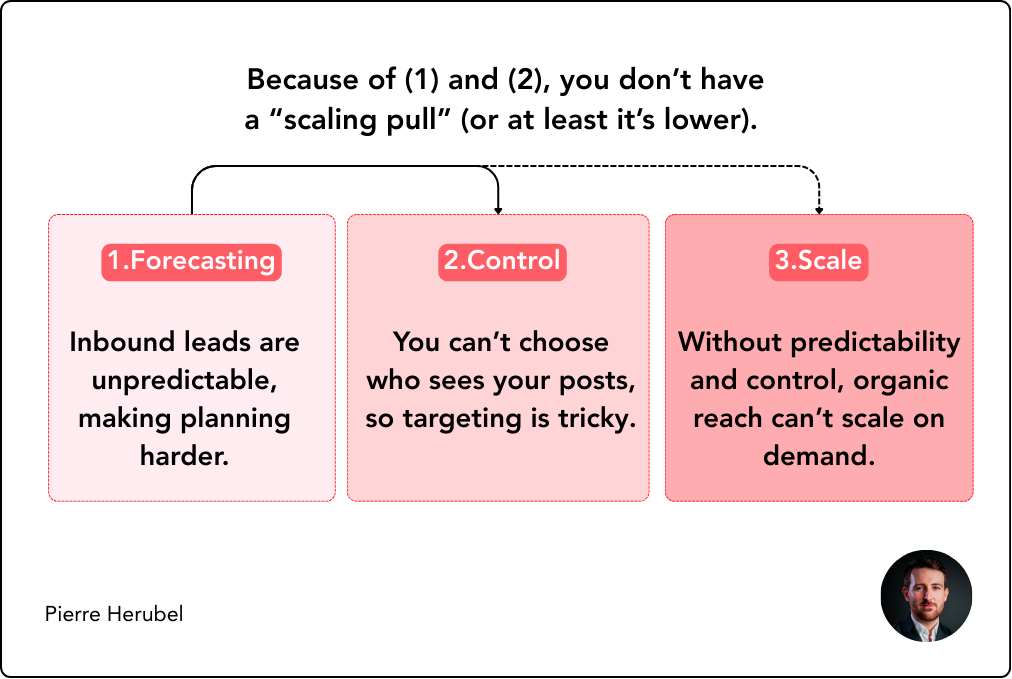
Because of these 3 downsides, pull marketing is not the magic hack everyone is looking for.
Example
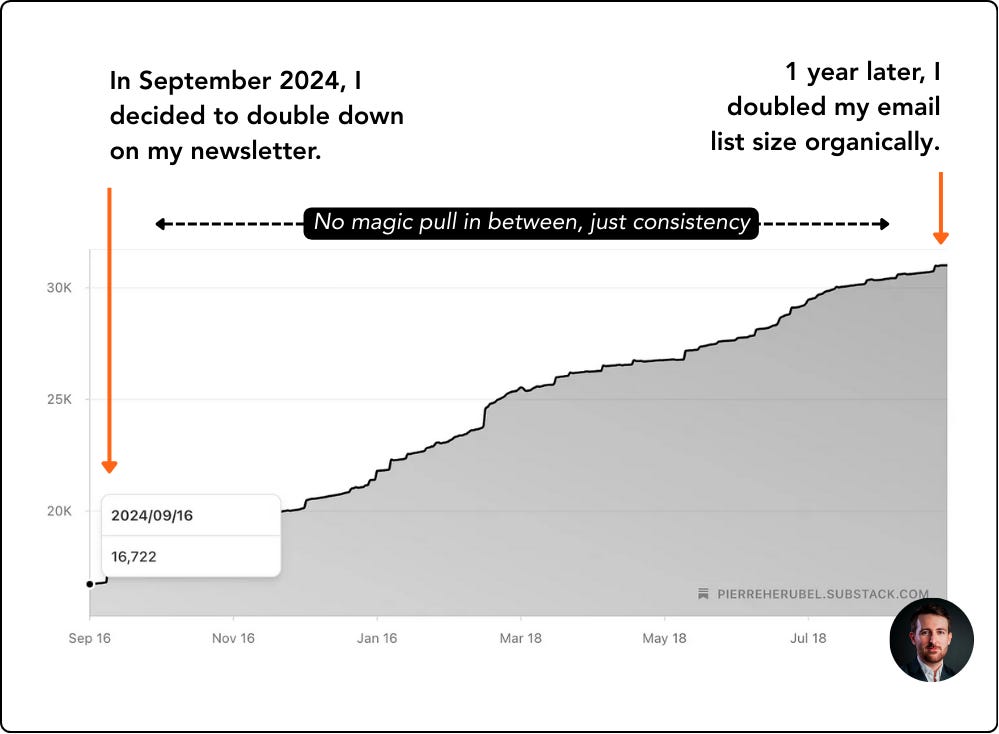
If I had only my newsletter from September 2024 to September 2025, I would have struggled to acquire leads and customers.
My newsletter is a great asset for my ecosystem. It can now generate up to 10 qualified calls per edition or dozens of course sales, but it took time to build. Between September 2024 and now, I used other more direct tactics to generate revenue.
Choose a good balance of pull and push tactics for a proper marketing strategy
Even when prospects have an intent to buy and like you, you should not rely only on pull tactics
The buying dynamic is different depending on the customers' state. They can be searching for a solution (pull) or in a passive state (push). When they’re in a “pull state”, they actively look for solution, experience internal buying triggers, and grow an intent to buy.
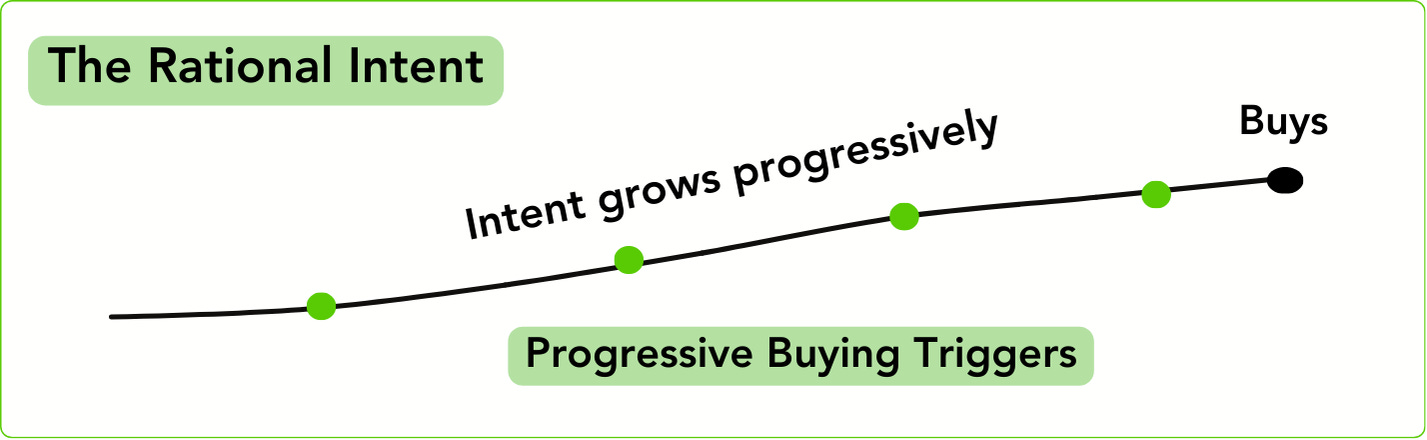
This is the ideal type of prospect for brands because they are:
Educated on the problem they want to fix
Potentially know a bit about the solution
Have a solid intent to buy (not just curiosity)
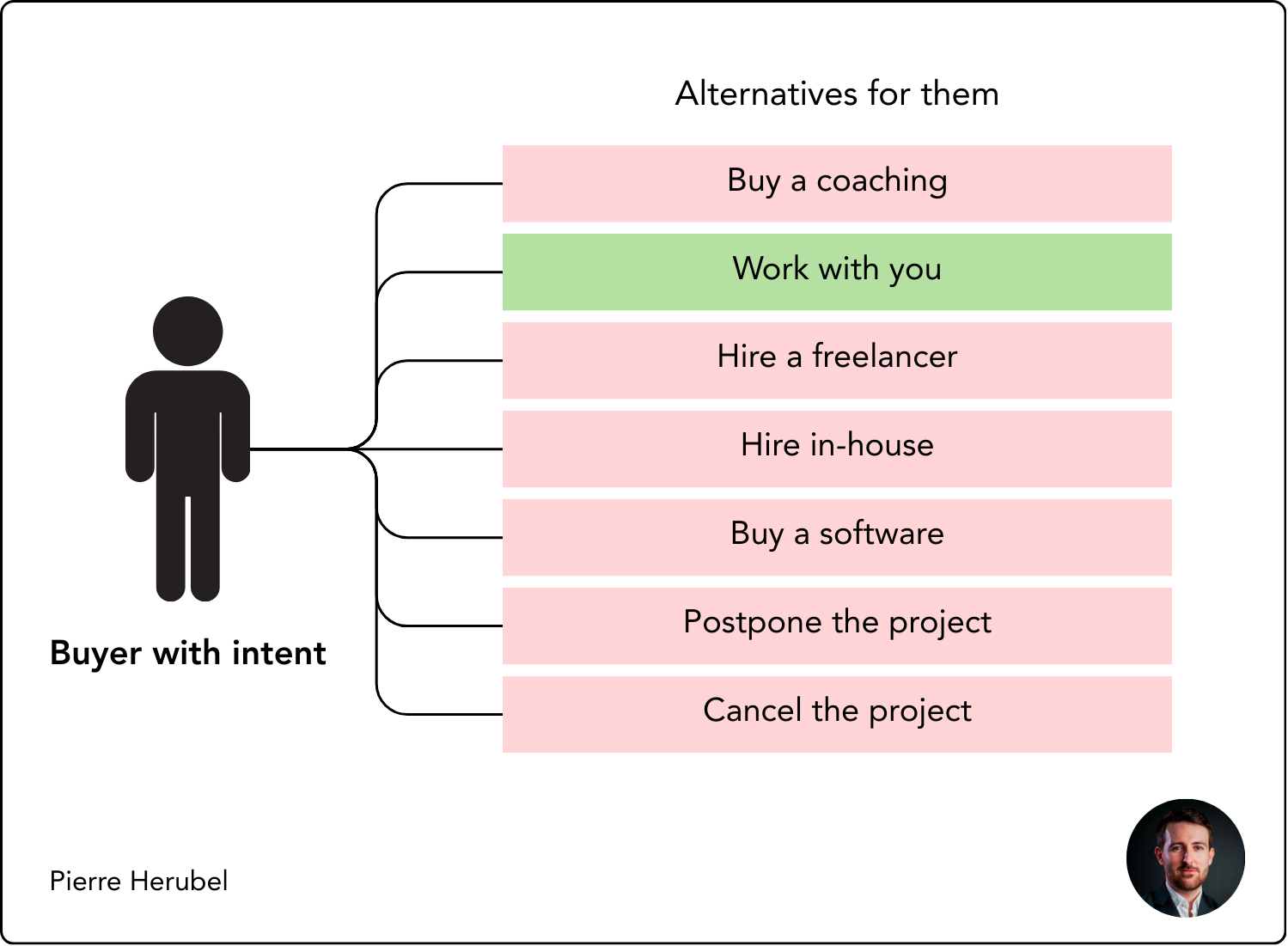
Here, you might think that they will necessarily contact you and become an “inbound lead”. But it’s not always true as they might choose alternatives.
They could opt for coaching to learn how to do it
They could hire an agency or a freelancer to do it
They could look for a software to automate it
They could choose to do nothing and deprioritize it
They could choose to postpone the project to next year
→ That’s why I always recommend to mix pull and push tactics.
There is a simple solution for you to choose your set of pull & push tactics (and create your winning playbook)
You should choose an “allbound” approach where you mix pull and push tactics. And within those tactics, you should mix between short term, medium term, and long terms tactics. Also, you should take into consideration the investment required. I’m going to explain how in this section.
Here are the 3 criteria you need to take into consideration to build your playbook:
Pull vs push: Is it a pull or a push marketing tactic?
Time to see results: How long does it take to generate the first significant results?
Investment: How much does it cost to implement the tactic?
Here’s an example of a mix with 3 pull tactics and 2 push tactics:
In this example, we base the pull strategy on LinkedIn posts, long videos (for YouTube mainly), and a podcast (hosted on YouTube and distributed on LinkedIn too). On top of this, we add retargeting Google ads to send traffic to our website and social selling (DMing our audience) directly on LinkedIn.
Pull tactics:
LinkedIn posts (thought leadership and expert content)
Long-form YouTube videos (expert content)
Podcast (hosted on YouTube and distributed on LinkedIn)
Push tactics:
Retargeting Google Ads (driving traffic to the website)
Social selling (direct LinkedIn DMs to the audience)
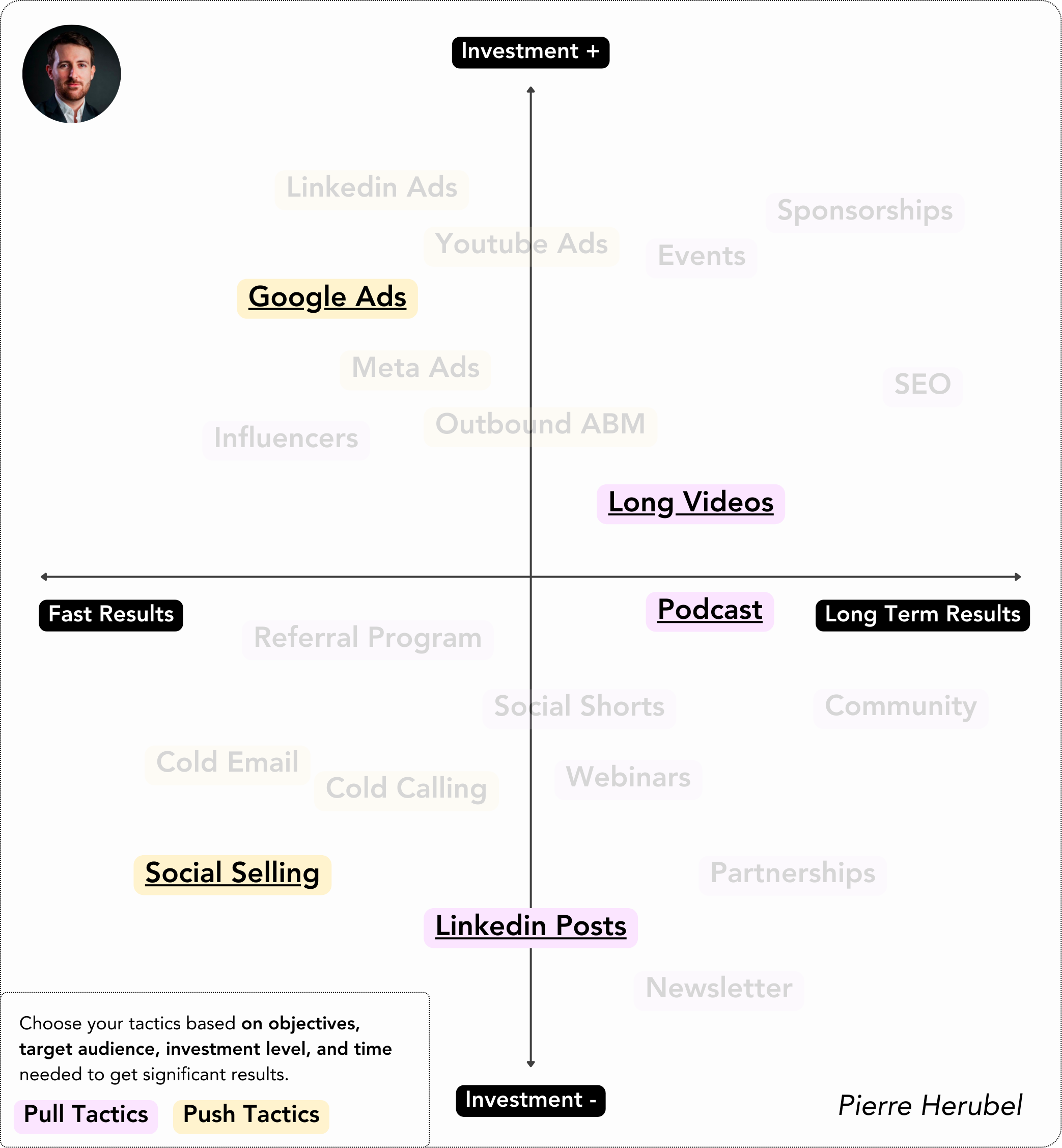
As a conclusion, you should not isolate pull and push marketing tactics. Instead, you should combine them together in your marketing playbook. So you can get the best of both worlds and generate compounding effects.
That’s the end of this edition. I hope it was helpful for you!
Thanks from Georgia
That's a really cool article, thanks! In my work with agencies, niche educational content is used as a commercial asset alongside outreach rather than “post and forget.” It effectively blends pull with push techniques, as you outlined them.