
My $90K/mo content ecosystem
And new course announcement

Hey welcome to this new edition!
In this newsletter’s edition, I’m going to present my $90K/mo content ecosystem.
You’ll discover the 5 pillars I use to generate revenue from content:
Pillar 1: My LinkedIn content & conversion system
Pillar 2: My newsletter acts as the ecosystem hub
Pillar 3: My YouTube channel is a conversion engine
Pillar 4: My outbound and social selling system capture demand
Pillar 5: My offer & sales system converts my audience into paying customers
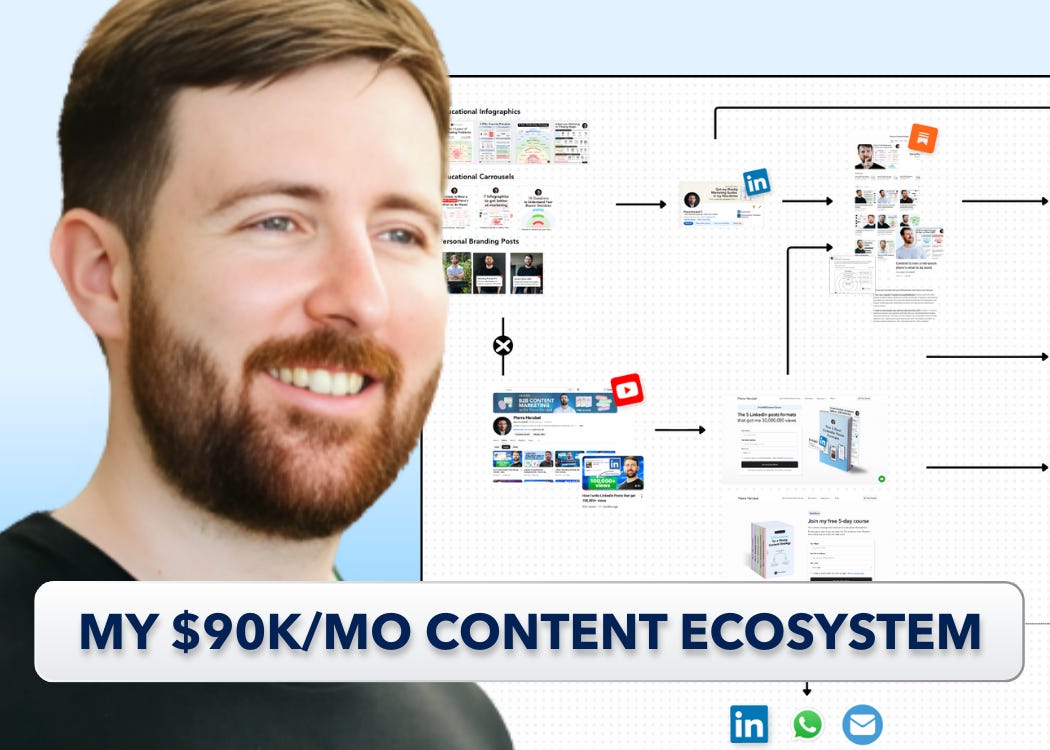
🎉 Announcement: My new course is live!
https://www.skool.com/principles-9384/about
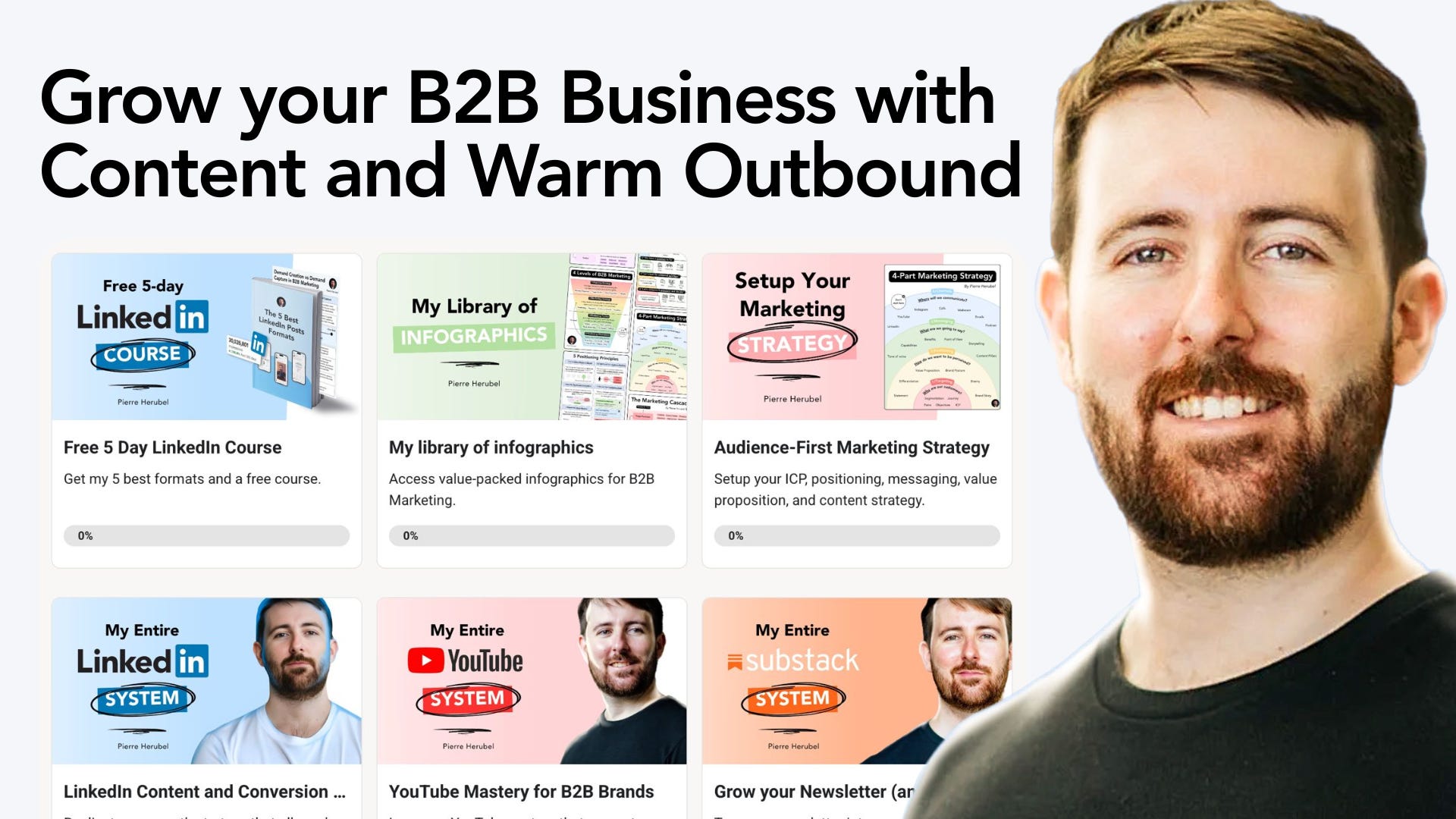
Pillar 1: My LinkedIn content & conversion system
I started posting on LinkedIn in 2022 and I now have 156,000 followers
My system is simple but powerful as I focus on three types of content:
First are educational infographics, where I solve very specific problems for my audience with clear, visual explanations. Second are carousels, which let me share bigger frameworks and my personal point of view on the market. And third are personal branding posts, where I talk about my journey, opinions, and behind-the-scenes work. Together, these formats position me as both an expert and a relatable person.
Here’s a simple overview of my LinkedIn content strategy:
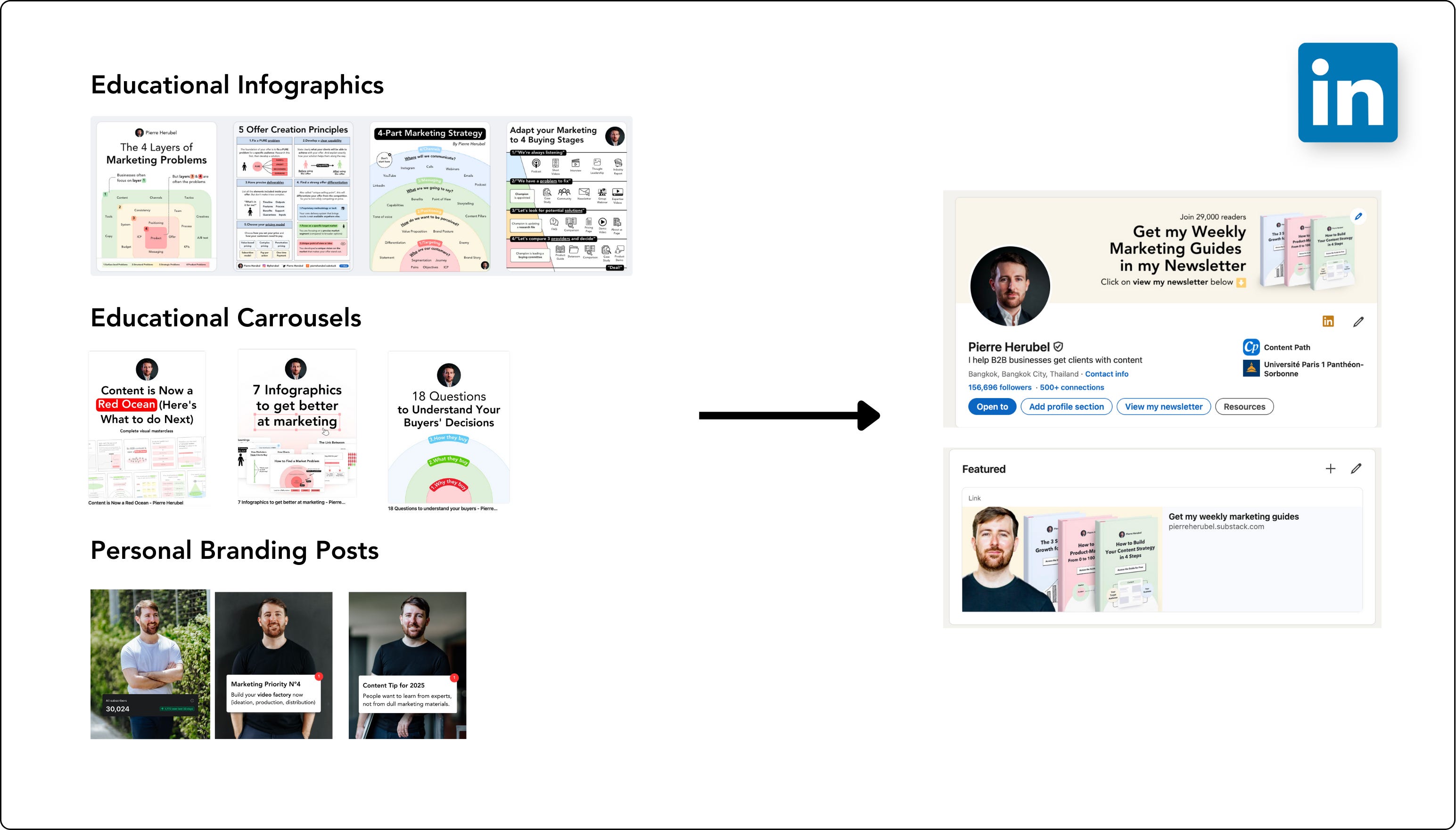
But posting alone is not enough. My LinkedIn profile works as a sales page.
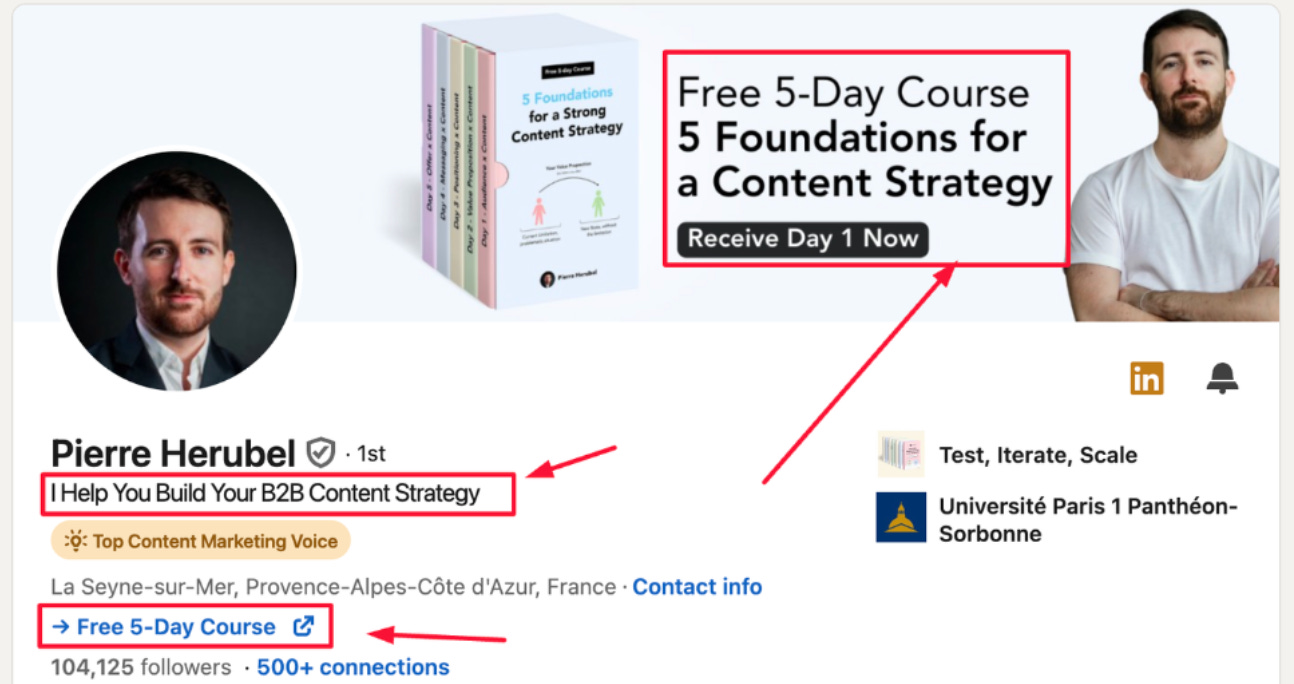
One of the main goals of LinkedIn is simply to redirect traffic to my profile. Every time I launch a new course or service, I update my profile to highlight it. This way, anyone who discovers my content can easily see what I offer and take action. My profile brings people into my ecosystem by sending them to my newsletter or directly to my products.
Here’s an example of a lead magnet strategy I’ve used in the past:
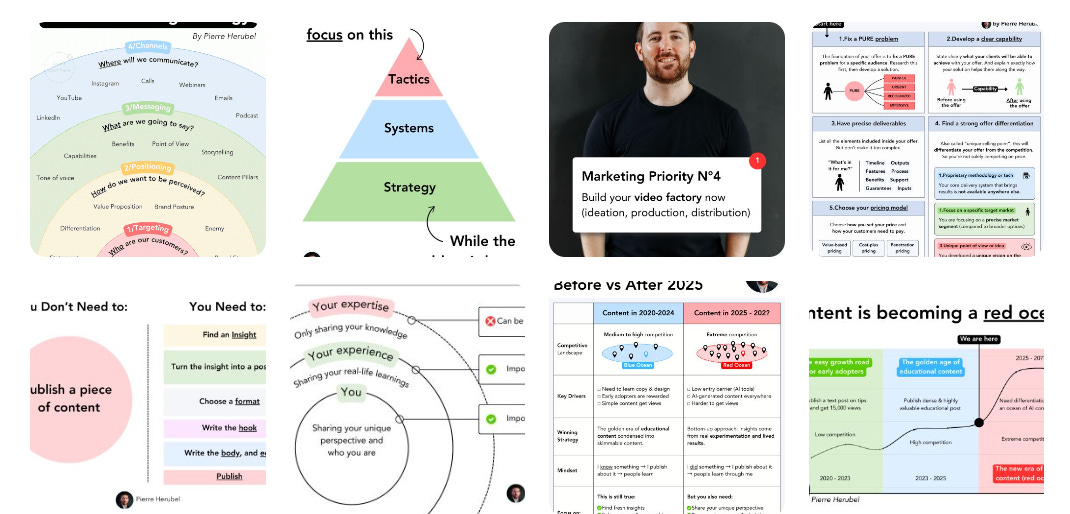
My content relies heavily on visuals (I’m competing with AI fluff)
The truth is that LinkedIn is now a hyper competitive red ocean. While it was easy to grow with text-only posts 12 months ago, it’s now almost impossible. That’s why you need to package your expertise into infographics, carousels, and visual content.
Here’s an overview of my LinkedIn visual content:
Pillar 2: My newsletter acts as the ecosystem hub
I started my Newsletter in 2023, and I now have 31,200 subscribers.
Every edition is visual, branded, and focused on unique insights
My newsletter is where I go deeper for my audience. I try to share insights that people can’t easily find elsewhere. I always include titles with unique angles and custom infographics so the content is clear, specific, and memorable. This makes the newsletter a place readers want to return to, not just a one-off read.
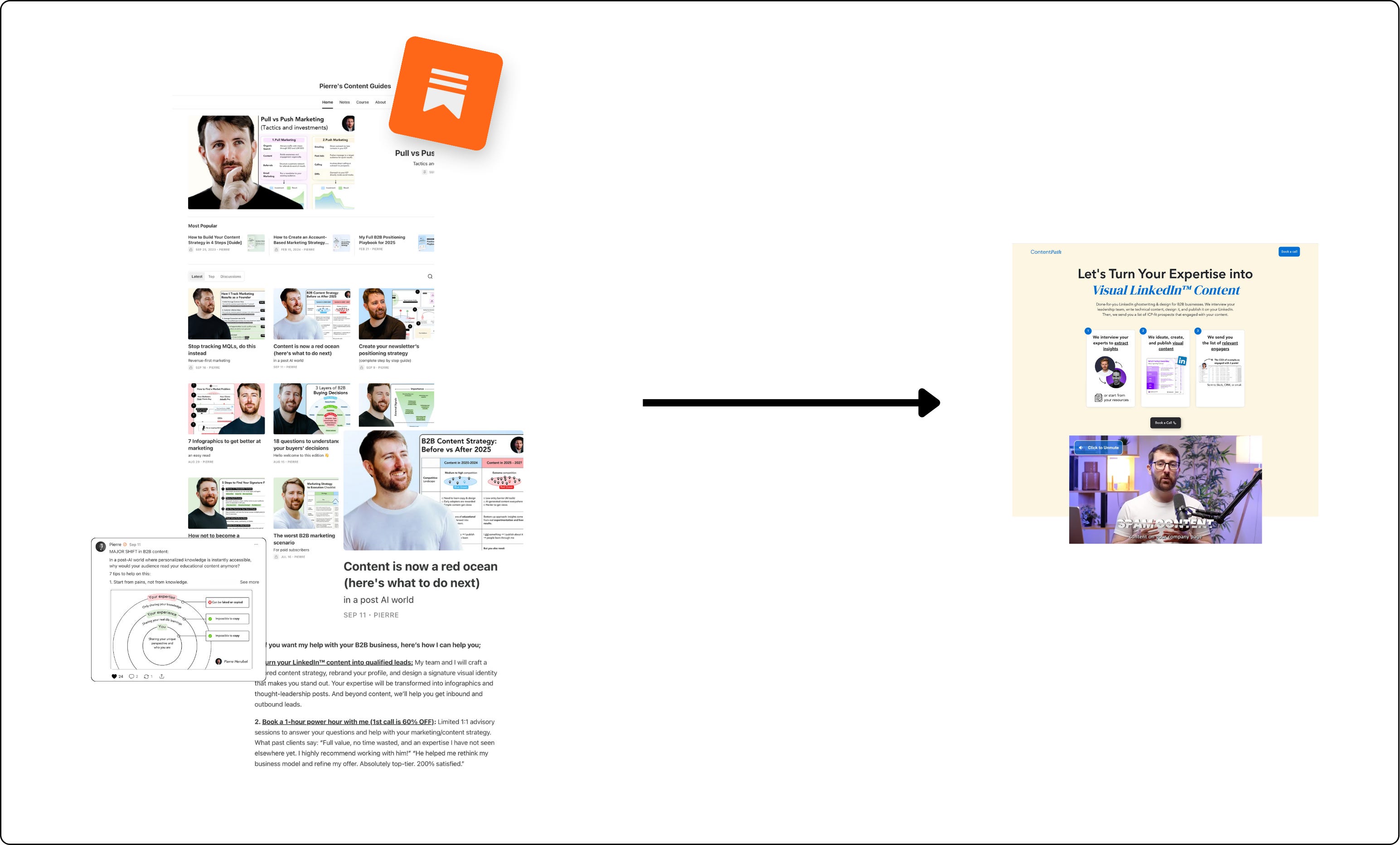
On Substack, I also use Notes to publish short posts 2 or 3 times a day.
These bring extra traffic to my newsletter and allow new people to discover me inside the platform. In every newsletter edition, I add clear call-to-actions that link to my different offers, from my done-for-you agency to my bootcamp and courses. This way, the newsletter is not only valuable content, but also a natural way to present my products.
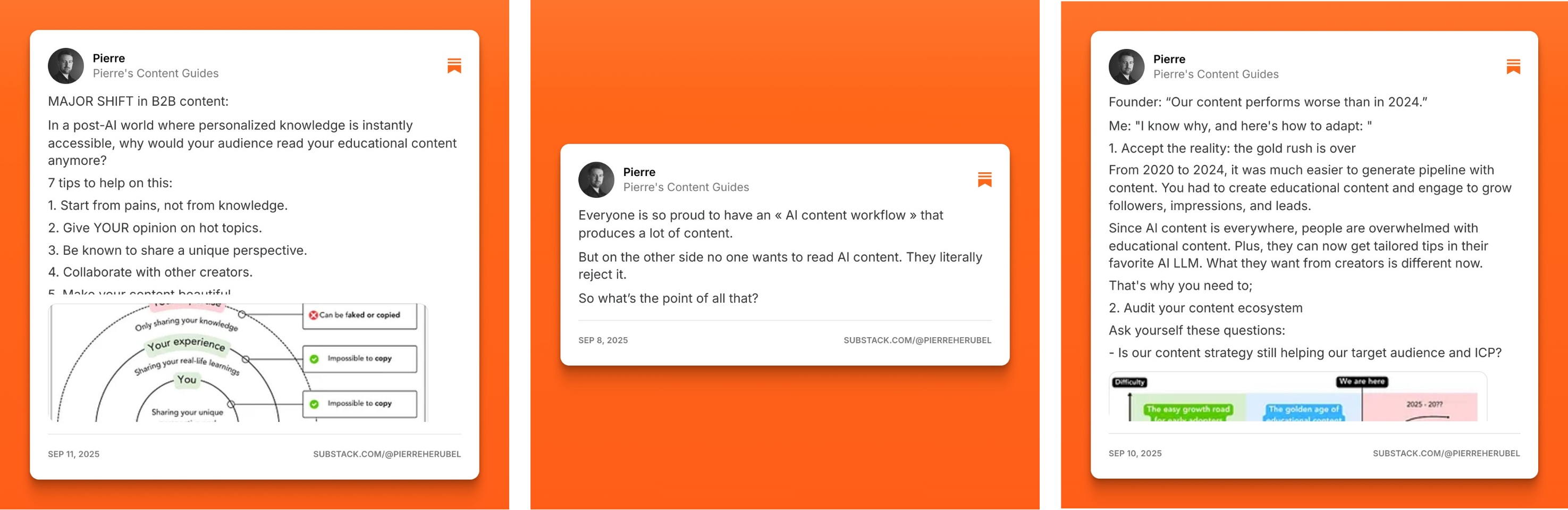
The newsletter acts as a central hub in my content ecosystem.
LinkedIn and YouTube help bring in new subscribers, but the newsletter is where I can nurture them over time. By giving consistent actionable insights and mixing in the right offers, I turn readers into long-term followers and, eventually, paying customers.
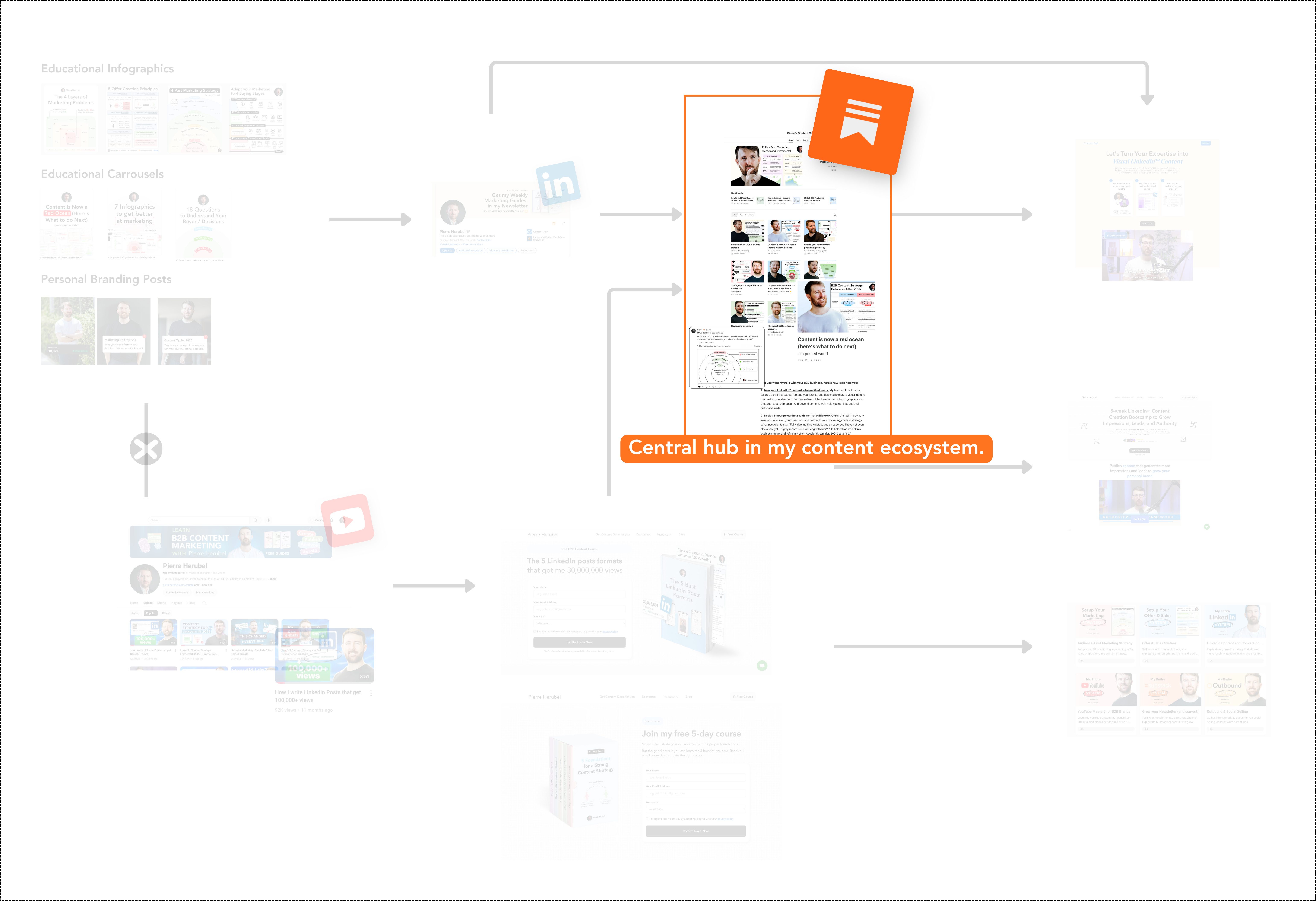
Pillar 3: My YouTube is a conversion engine
I started YouTube in 2023, and I now have 9,600 subscribers.
YouTube is a powerful conversion machine for emails, leads, and deals
My strategy is based on SEO-friendly videos that people can find when they search for solutions. These videos are practical, focused on real problems, and designed to stay relevant for months or even years. For example, tutorials on how I write LinkedIn posts or how to build a content strategy keep bringing in views and leads long after they are published.
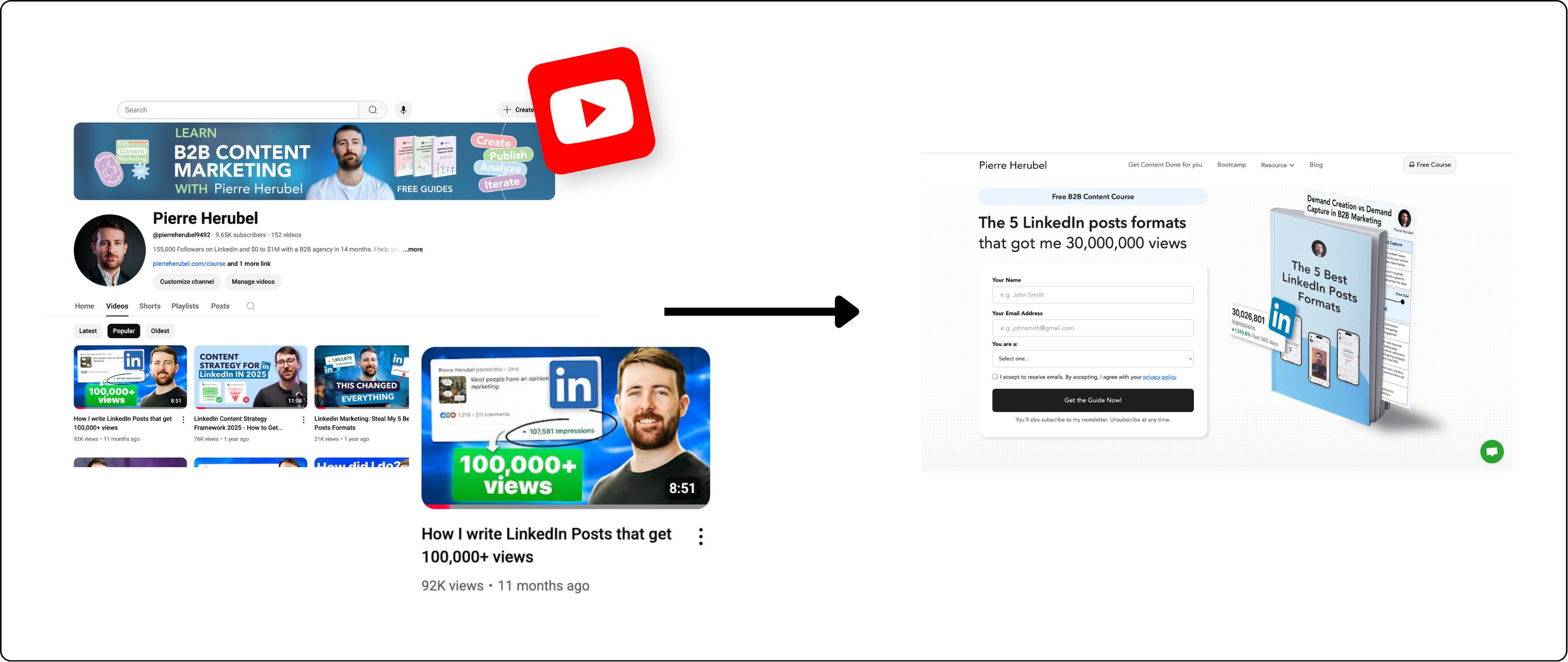
Inside each video, I always include a contextual lead magnet.
This means I give viewers a direct resource that matches the topic of the video, such as a free guide or a short course. These lead magnets are highly visual and actionable, so people feel they are getting something valuable right away. When they download it, they join my email list and enter my sales system.
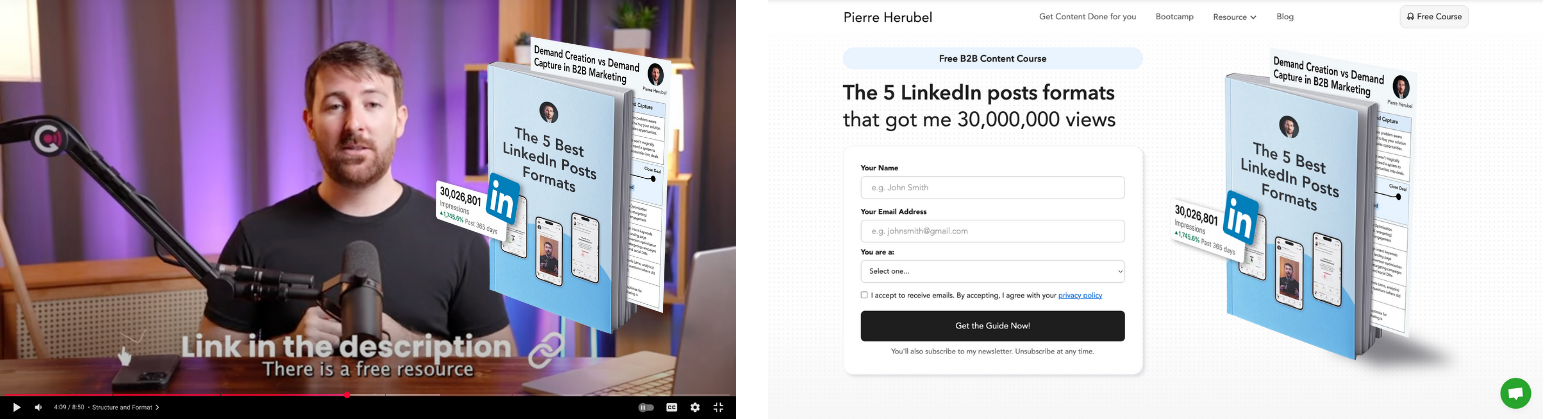
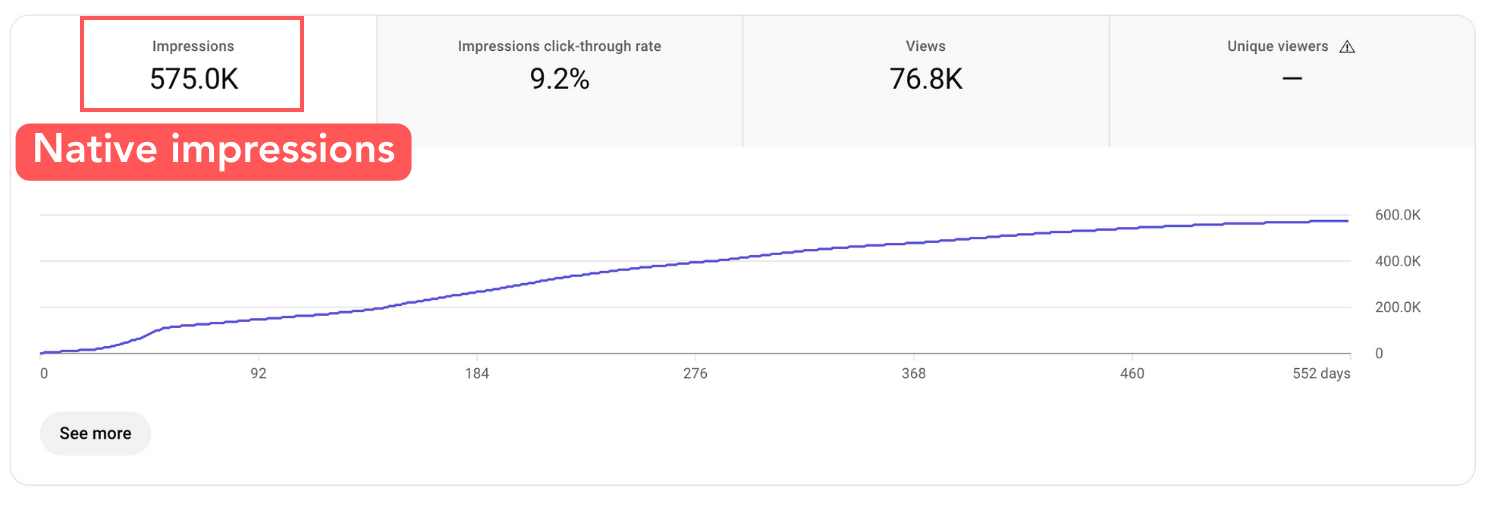
YouTube has its own built-in distribution mechanism
This platform has its own audience and distribution power thanks to search and SEO. So YouTube works as an independent lead machine that attracts qualified people, captures their emails, and feeds them into my ecosystem. This makes it one of the most reliable channels for growing my list and generating revenue.
Pillar 4: My outbound and social selling system capture demand
I started social selling in 2022
I combine my content with social selling and warm outbound.
Publishing content is powerful, but many people will still not take action on their own (busy, postpone, forget, etc). So I look closely at who visits my LinkedIn profile, who comments, and who engages with my posts. From there, I can identify if they fit my ideal customer profile and start a direct conversation.
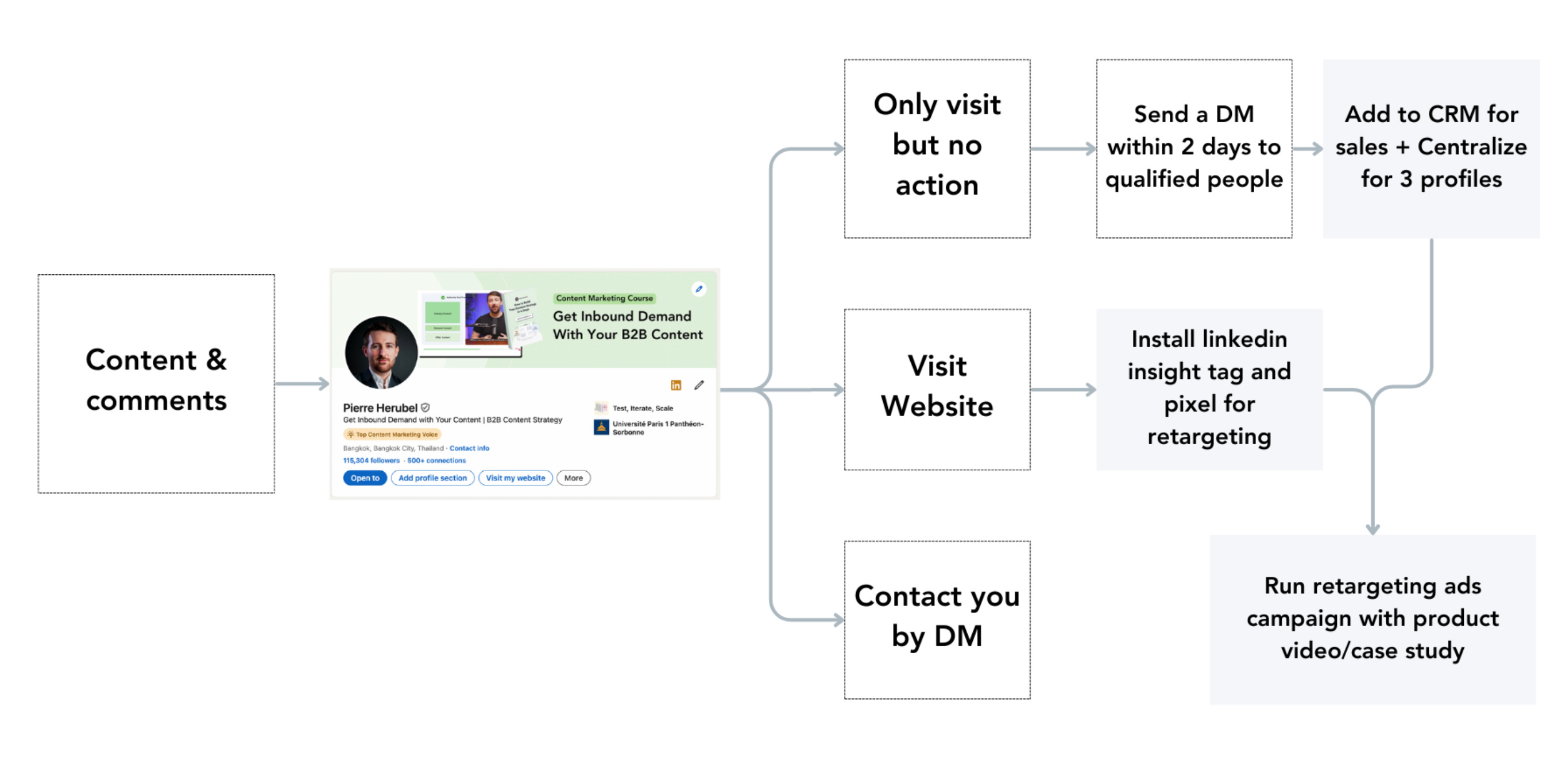
I use warm outbound rather than cold outbound.
Instead of pushing cold messages to people who don’t know me, I focus mainly on those who have already shown interest. Combined with warm email sequences, I can follow up with leads at the right time and in the right way. This ensures I don’t lose people who were already interested but got busy, distracted or simply forgot.

Pillar 5: My offer & sales system converts my audience into paying customers
I’ve been building all kinds of offers since 2018.
At the heart of my system is how I design and structure offers.
Instead of relying on one product or service, I create a portfolio of offers that covers different entry points for my audience. From a front-end offer that makes it easy to start, to a core signature offer that anchors the business. This approach reduces risk and makes the business more resilient.

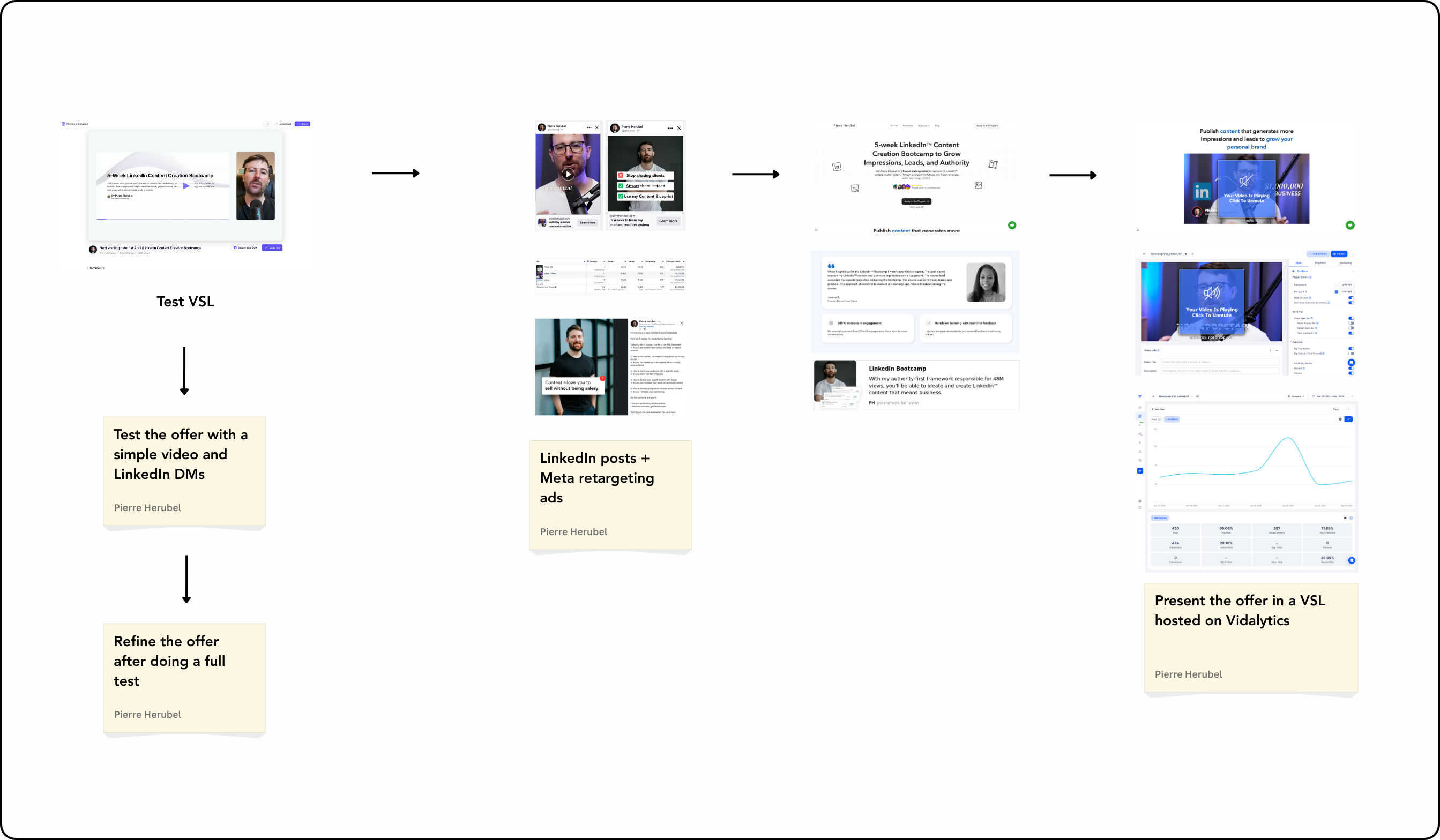
To test offers, I use a process I call Test → Launch → Operate (TLO).
The idea is simple: before investing heavily in one big launch, I test the concept in smaller ways to validate it. Once I see demand, I launch quickly to capture momentum, and then move into the operate phase, where I refine, optimize, and scale what works. For example, that’s how I validated my bootcamp in March 2025.
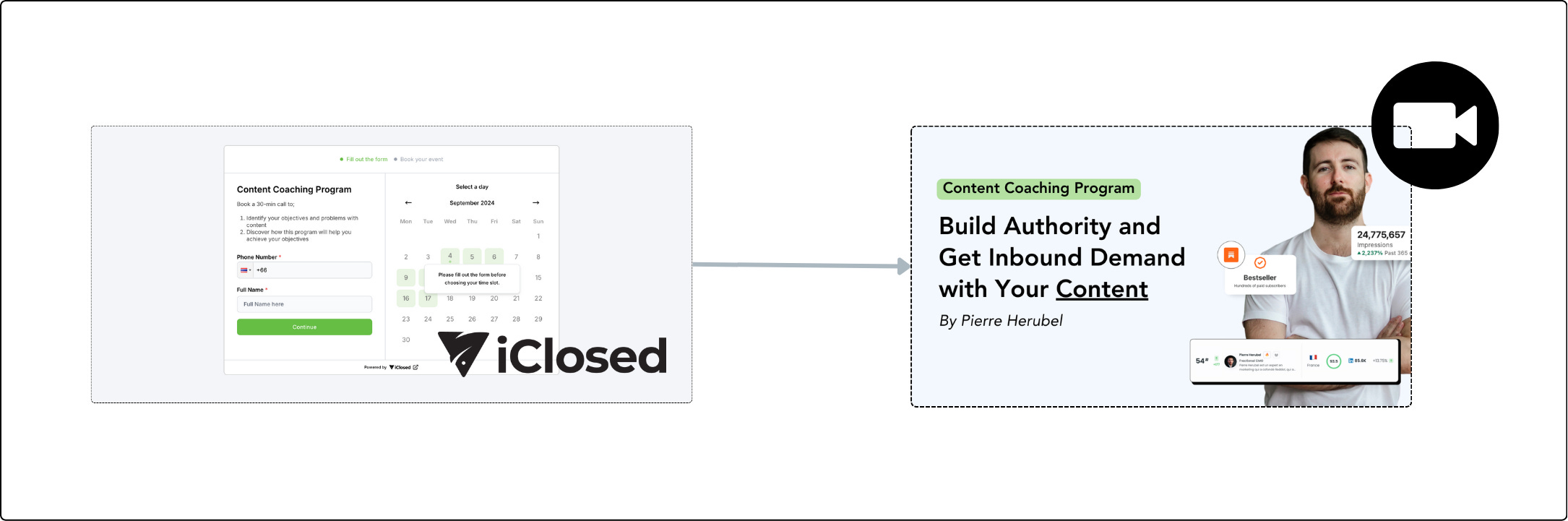
I use a recession proof sales system to close medium and high ticket deals
Of course, good offers only matter if they are supported by the right sales process. My Offer & Sales System is designed to take all the attention I generate with content and convert it into real deals. Over the past seven years, I’ve built and sold many types of offers, from $50K services, $590 courses, $5K monthly retainer, to $19 products.
In this newsletter, I’ve shared an overview of the different parts of my content ecosystem with you (from LinkedIn and YouTube to my newsletter, outbound, and sales systems).
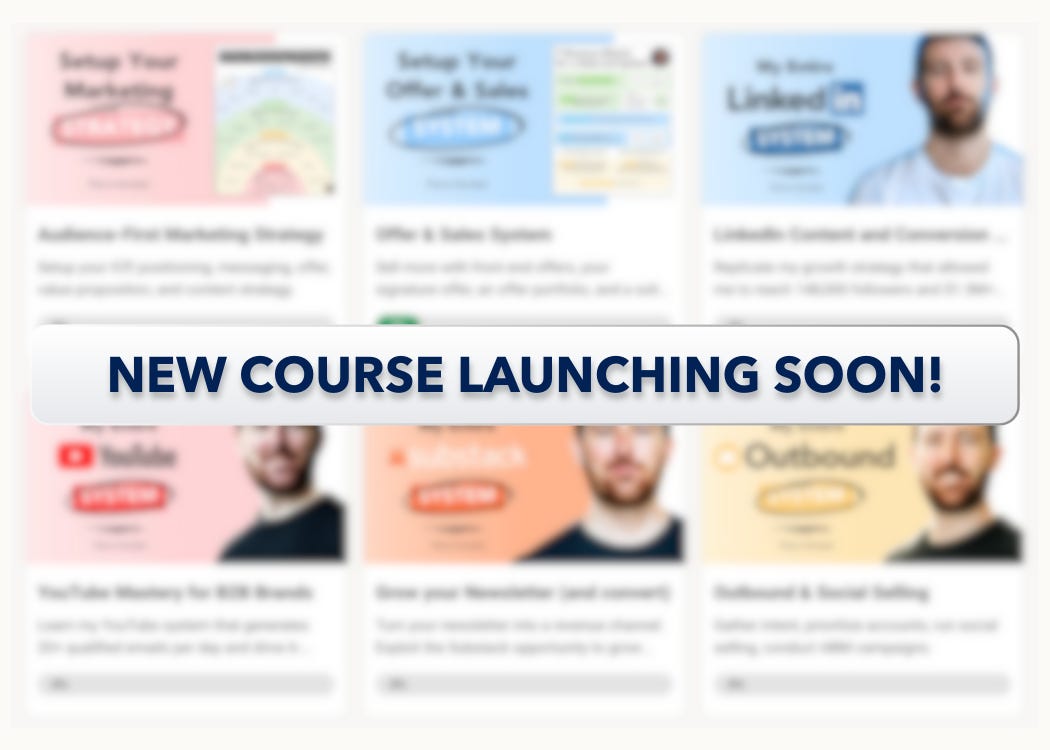
In just a few days, I’ll bring it all together in a complete program.
It’s the first time I’ve packaged my entire process step by step, so if you’ve been curious about how to build your own ecosystem, stay tuned. You’ll be able to replicate this system.
Oh, my goodness. This is the quiet question that I think stops so many talented people right in their tracks. Thank you for asking it out loud for all of us.
It is so easy to see a platform grow and instantly feel like you’ve missed the boat, like the party’s already over before you even got the invitation. It can send you right into that hamster wheel of "what's the point?" and it's a really tough feeling to shake.
A post like this is more than just an answer; it’s a permission slip for anyone who has been hesitating on the sidelines, wondering if their voice still has a place. I am so incredibly ready to read your take. This is so, so needed. ❤️
This is super Pierre, congrats! One question - you mentioned in your piece testing ideas to understand demand before creating content, say a course. Could you share more how you test in the market? Thank you!